Do casinos cheat?
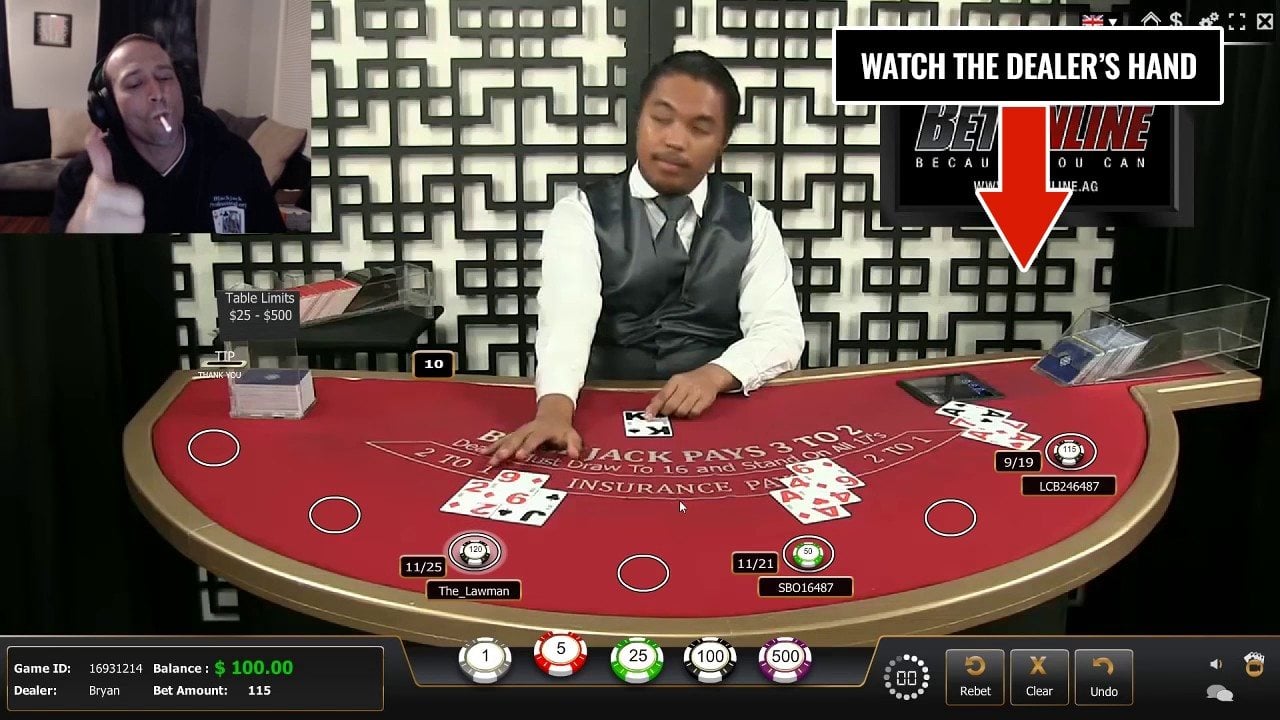
US-facing online sportsbook BetOnline is the buzz of the internet at the moment after one of its live casino dealers appears to have been caught on video cheating at blackjack. On Saturday, self. Aug 12, 2020 Online Casino Dealer Cheating Video. How To Avoid The Online Casino Scam: Before you enroll in a casino's list of players, research the credibility of it. It might sound like simple common sense, but it is essential to do some initial research about any site or casino you intend playing at. Believe it or not, some casino cheats try to manipulate video poker and slot machines.Cheating at casino table games is one thing; there are aspects of most table games that give cheaters an opportunity to manipulate the game in their favor, like the dice roll in craps or marking cards in blackjack and other card games.
Let’s start with a quick sorting of definitions. If you merely say that cheating is being dishonest, then there are both honest and dishonest casinos. The honest casinos comply with regulations, file required reports, and train their employees to abide by the law. Once in a while an honest casino will arrest its own employees for cheating.
The dishonest casinos are intentionally breaking the law. Don’t expect them to file accurate regulatory reports or call the police when their employees do something wrong.
And yet some argue that because casinos only offer games that come with a “house edge”, a theoretical percentage that favors the house, they’re really cheating the players. This subjective point has been debated many times from many angles.
Are you merely paying for entertainment or are you throwing your money away?
Is it the casino’s fault if you have a gambling problem?
That doesn’t really address the question of whether a casino cheats.
Cheating versus Stacking the Odds
Although we usually say “odds” when thinking of probabilities, the gambling industry uses “odds” to refer to the amount of money a casino stakes against your wager. Say you lay down $100 on a single number on a roulette table. The casino offers 35-to-1 odds on European roulette. That’s a high payoff, but gambling math enthusiasts love to use roulette to demonstrate how the odds differ from the probabilities. You have a 1-in-37 chance of the roulette ball landing on that number.
In this game it’s clear that if everyone bets the same amount on a different number, and 36 players pace bets at the same time, then the casino is guaranteed to keep 1/36 of the wagers. 35 of the players will lose their money but 1 player wins back 34 times his original wager (plus the wager itself).
In this unlikely scenario two people win: the house and the lucky player.
So is the casino cheating the players or is it merely taking a statistical “fee” for running a fair game?
The odds are stacked in the casino’s favor, ever so slightly. If you feel that is cheating then the lesson to be learned here is to not play roulette.
But if you are okay with the casino taking enough money to pay its bills and make a profit, then may the odds be ever in your favor.
Cheating versus Bad Gambling
In a completely fair game of chance neither side has an advantage over the other. You’re both staking a wager on the unknown outcome of an event, like a sporting event or the spin of a slot machine. One player’s wager may be proportionately greater than the other. Ideally that higher stake is comparable to the likely outcome of the event.
Here’s an example:
How likely is it that you’ll get five of a kind in draw poker?
On a video poker game the casino pays a really high prize for five of a kind (in games that allow that result). It just doesn’t happen often.
Another tenet of fair gambling is that both players know what they are doing. When it comes to the general gambling population, casinos do often have an advantage. Either players are trying out new games whose rules are unfamiliar to them, or the players may be tired or inebriated
It doesn’t help that casinos create an environment that helps you forget the time or drift into a semi-mesmerized state of mind.
If a gambler is playing with impaired judgment the casino has an unfair advantage.
But the casinos argue they don’t force players to drink. Nor do they require you to gamble continuously.
While critics argue that the casinos create fantasy environments that lull the alert mind into a dull state, the casinos counter that argument by pointing out that players can leave at any time. The casinos also offer entertainment venues, dining and restroom facilities, and shops. Members are welcome to get up, walk around, and do something other than play games.
It’s up to you to decide how you spend your time in the casino.
On the other hand, the casino wants you to you to play games. They create an atmosphere that makes you feel comfortable while playing games. The casinos’ strategy is to remain just on the right side of the line versus cheating and benefiting from a player’s poor judgment.
Cheating versus Declared Theoretical Returns
Gambling writers devote many words to explaining and analyzing “theoretical return to player” and “house edge”. These are two sides of the same coin. When the math is done correctly, both percentages add up to about 100% (allowing for rounding errors).
What the house doesn’t keep is supposed to be reallocated to the players.
Through the years writers have discussed how much the percentages on slot games matter and whether casinos adjust them. On older, mechanical machines there was, in fact, a switch that floor managers could use to change the approximate theoretical return to players.
Modern games now rely on computer software that is burned into special chips. The chips have to be replaced or reprogrammed in order to change the theoretical return to player. All of these changes have to be made according to regulations set by government authorities.

In other words, floor managers no longer just “flip a switch”.
The problem with studying theoretical returns, however, is that they are based on probability distributions. Probability distributions only accurately depict the data against which they are calculated. That data either comes from past games (which do not predict future results) or from simulated games (which do not predict future results). When computed against enough data these probability distributions indicate about how much money the players should retain (altogether, and not allowing for putting wins back into games) and how much money the casinos should keep.
In reality, a probability model could (and probably will ) be wildly wrong over a short number of plays. The fact that a player takes his winnings and gambles them on future games also alters the distribution. A theoretical return to player or house edge assumes that every wager is a new stake. Few players use only fresh wagers; most of us roll our winnings over.
Given all these variables, why should a casino cheat if it already has a statistical edge not once but twice over?
The risk versus potential reward is awful.
Cheating versus House Rules and Terms of Service
Players may not realize it, but legitimate online casinos pay close attention to all the terms they ask players to agree to. When you join an online casino or any casino’s rewards program, you agree to follow certain rules. Players who just assume they know the rules may run afoul of them. These player mistakes sometimes lead to disagreements and complaints, especially when casinos withhold winnings.
It is the player’s responsibility to read the terms of use and all applicable rules. Some online casinos have been known to break up these player agreements, displaying them in different parts of their websites.
Here’s an example:
You may agree to one set of rules when you join a casino.
But when you enter a tournament or take advantage of a special promotion you may be required to agree to another set of rules (explicitly or implicitly) that only apply to that tournament or promotion.
If casinos make it hardfor players to piece together all the rules they agree to abide by, then there’s a fair argument for saying the casinos are giving themselves an unfair advantage. By the same token, some players are caught trying to cheat the casinos and then complain about forfeited winnings.
There may also be honest player mistakes that regrettably lead to forfeited winnings.
Here’s an example of that:
Suppose you use your brother’s credit card to make a deposit in an online casino account. That’s illegal. The practice violates guidelines published by legitimate online casinos. You’re required to make deposits from your own financial accounts. When a casino discovers a player made improper deposits, they will revoke the player’s membership, return the original deposit, and retain all winnings.
Cheating versus Changing the Rules of the Game
Casinos sometimes add their own “house rules” to the games they offer. A blackjack table may restrict the kinds of wagers that can be made, thus diminishing the expected return to player.
A new roulette game may also be brought in. Have you heard about Sands roulette? This variation on the classic game offers 3 green numbers instead of the 2 found in American roulette and the one green number found in European roulette.
The odds in Sands roulette are even worse for players than the odds in American roulette.
As long as the casinos display these new rules prominently, such that the players are aware they are participating in non-standard games, then it’s all on the player. If a casino obscures the fact that the rules are different then most, people would argue the casino is not being fair.
That’s a form of cheating. Whether it’s illegal depends on how the house obscures the rule change and what the local laws permit.
Rigged Games Do Exist
Make no mistake, though.
There are indeed some unscrupulous casinos out there.
Illegal casinos can rig their games in various ways. Some online casinos steal the software used by other casinos and offer games without proper authorization from the game makers.
Can you trust these casinos to be fair and honest with you?
Why don’t they just pay for the software and get legitimate online gaming licenses?
Illegal land-based casinos may use rigged roulette wheels, or they may employ dealers who don’t shuffle or deal cards properly. Once a casino operator decides to step outside the bounds of local laws there’s no knowing what they will do to their players. That is why law enforcement agencies in many jurisdictions work hard to crack down on illegal gambling operations. These guys are acting in bad faith from the very start and they most likely prey on people who are addicted to gambling.
In a legitimate land-based casino the dealers are required to stand in certain positions and move their hands in ways that make it apparent to security officers they are following the rules. Customers may think these hand movements are odd at first, but once you understand the language of dealer movements you should feel reassured.
A legitimate online casino must have a gaming license from a government authority. You should be able to find who licensed the casino on their website; you can then verify the casino’s license is valid by checking with that gaming authority.
Also, as you load the games in your web browser, watch the address bar to see where the URLs point to. If you don’t recognize the domain name of the gaming server, you may have reason to suspect the software has been pirated.
You can compare how the same games are served through different online casinos to see if someone is using a different gaming server. Of course, some companies own multiple online gaming casinos so a little due diligence is required.
But this is why it’s important to check with online gambling forums for updates about which casinos may be cheats.
Conclusion
Every gambler eventually stops to wonder if they are being cheated by a casino.Although there are illegal casinos, any properly licensed casino that abides by regulations is generally trustworthy.
But like many other industries, the casinos do everything they can to help their customers spend more money (legally). Since the games are designed to ensure the house keeps at least some money over time, all the casino really needs to do is convince players to keep gambling.
Statistics does the rest.
Casinos are more likely to invest in developing a fun entertainment experience because they know that will pay for itself over time. Whether online or offline everything the casino does is designed to encourage you to play more. As long as the casino is obeying all applicable laws it doesn’t have to lie or intentionally mislead you.
So why do we gamble?
- We get a thrill from the experience of taking a risk.
- Because we enjoy doing things with our friends or even just amid crowds of strangers.
- Because we might win more money than we risk.
The player who pays attention to everything the casino says and does is less likely to feel cheated or be cheated. The bottom line when it comes to gambling against the house is to always be at the top of your game.
So go easy on the alcohol, even if it’s provided to you “on the house”.
Table Of Contents
This year’s Top Stories are brought to you by Upswing Poker. Find free articles, quizzes, and resources that will help you take your game to the next level now on upswingpoker.com.
When Scott Van Pelt picks up a poker story for one of his 'SportsCenter' segments, it has officially hit the mainstream.
That's what happened when arguably the poker story of the year blew up this past October.
Before that, Mike Postle was a name known only to a small group of regulars paying attention to the cash game scene at Stones Gambling Hall in Citrus Heights, California, just outside of Sacramento.
When the story began spreading like wildfire through media both mainstream and social, the Mike Postle cheating scandal dominated poker conversation like few topics in the game's history.
When anyone in the poker industry looks back on 2019, the first thing they'll recall is the saga of Postle and his god-mode performances on live stream at Stones.
Win a Trip to Vegas + $20,000 in Cash!Download the MuchBetter app to win a luxurious Las Vegas getaway along with $20,000 in cash!
Play NowThe Whiff of a Cheat
The Mike Postle cheating scandal started, publicly at least, with a tweet.
Privately, Veronica Brill had been dogged by suspicions for months. She'd aired those suspicions with a select few, including higher-ups at Stones.
How was it possible for Postle to win so much, so consistently, with such staggeringly perfect play?
His moves and instincts were positively superhuman. Eights full versus tens full in a small pot on the river? Postle just called a bet.
Facing heavy action in multi-way pots when nobody had a nutted hand? Postle boldly blasted in a bluff to win the pot.
Use this PokerStars Marketing Code to activate a great new poker bonus!
In a vacuum, perhaps one or two could be explained away. Connect the dots, though, tack all the clues to a corkboard like a TV detective, and the circumstantial evidence all pointed the same way: something stank at Stones. And Brill seemed to be the only one smelling it.
So, she did what any sane person with a scandal story in poker does in 2019. She contacted Joey Ingram.
Ingram on the Case
Brill reached out to Ingram and told him she was ready to go public. She'd been rebuffed in her attempts to get Stones higher-ups to see Postle's rampant thievery, but she had put together a little 'highlight tape' of Postle's play that she was ready to release on YouTube.
Ingram had actually been invited to Stones a couple of times to do commentary but he never had any interest in making the trip.
'This dude was just playing in a way I've never seen anybody play.'
'It didn't really make much sense to me,' he said of his initial reaction to Brill reaching out. 'I didn't really think much about it.'
When Brill's video came out a week later, Ingram took a look and found himself instantly hooked.
'I saw this dude was just playing in a way I've never seen anybody play,' Ingram said.
He fired up a live stream for his fans, and they painstakingly combed through every hand Postle played over the course of a five-hour streamed cash game at Stones. Ingram had selected the stream at random, and he happened to choose one of the first streams in which Postle's god mode had been toggled on.
Had he selected a stream from just weeks earlier, the show would have wound up rather boring.
Ingram had already seen enough to make him suspect Brill was onto something, but he wanted his followers to watch with him as a sort of sanity check.
'Maybe I'm fu****g crazy and the fans can watch and say, 'No, dude, you're out of your mind.' Or maybe they'll see it too.'
While Ingram and Brill are widely credited with disseminating everything to the poker world, Ingram pointed to the helping hands of two high-profile players as well.
When Haralabos Voulgaris and Scott Seiver got a look at the video and began tweeting about the situation, Ingram said everything blew up and 'it was on.'
The streams continued for the next several days. Ingram knew he was on the story of his life and he determined that he wouldn't let up. He went more than a week straight without a break, four to six hours every night.
'The guy's adamant he didn't do anything.'
'I was like f*** it, I'm doing it every night,' Ingram said.
While many initially preached caution, public opinion turned in a hurry. Those on the fence quickly turned on Postle when evidence mounted, as Ingram and Co. uncovered damning hand after damning hand.
When forum-goers crunched the numbers after grinding through the streams, they estimated Postle had cleaned the games at Stones out to the tune of around $250,000 despite playing mostly $1/$3 and $2/$5 games.

That win rate put him so far off the scale into outlier territory that it left little doubt something untoward had happened — at least to most observers.
'10,000% Innocent'
Doing his due diligence, Ingram managed to get a hold of the man himself.
'He was very courteous,' Ingram said. 'The guy's adamant he didn't do anything.'
Postle also vociferously defended himself on Twitter, saying he's played a 'unique high-variance style' his whole career and been a winner for over a decade.
The tweets have since been deleted and Postle hasn't gone on the record with any outlet other than appearing on Mike Matusow's 'The Mouthpiece.'
Matusow made much contrarian noise on Twitter when others vilified Postle, and whether that was a factor or not, Postle appeared on the show.
Postle stuck to his guns despite the mounting evidence, again blaming the accusations on jealous haters. He denied winning anywhere near $250,000 and said he was '10,000%' innocent.
Into the Weeds
Naturally, the internet sleuths and content creators and forum lurkers took Postle at his word, and the story ended there.
No, what actually followed was one of the deepest internet dives since the release of 'Making a Murderer.' Ingram and his posse of detectives put their heads together during his streams and in a lengthy TwoPlusTwo thread.
Several questions remained unanswered. How long had the cheating gone on? Could legal action be taken? And chief among them: how exactly had Postle pulled this off?
Onlookers tossed around theories and dissected minutiae in the hundreds of posted live-streamed games at Stones.
General consensus eventually settled on Postle somehow having access to the live hole card feed via his cell phone. Internet sleuths uncovered small details that seemed to point this way, with the most influential being a still that showed a blue screen, one that looked similar to the one displayed on the stream graphics back end.
The truth hunters even detected tiny changes in Postle's clothing, the most suspicious being an apparent lump in his hat that some theorized was a communication device.
By now, suspicion about possible accomplices abounded, and investigators dug into the backgrounds of Stones employees. Possible connections were explored, but no smoking gun ever really emerged.
'Obviously, you never see anything like this where a guy's cheating on a live stream, laughing in these dudes' faces and grabbing his dick.'
Nonetheless, Ingram and his 'team' dove into every possible avenue of the story, turning the live stream videos and other relevant internet sources into a 'Holes'-like landscape of pockmarked wasteland. No second was left unwatched by the masses, in case that was the second Postle slipped up and revealed the telling clue.
'My mind was so warped,' Ingram said. 'I was thinking about the story 24 hours a day.
'I don't think interest really waned, honestly. It was growing and growing and growing. There was people that were still extremely interested in there. It's just a matter of finding a different angle. I think it was the biggest month on my channel ever.'
The Mainstream and the Courtroom
Eventually, Ingram wasn't alone covering the saga. The story broke out of its poker glass ceiling as mainstream sources picked it up, with the peak undoubtedly coming when ESPN anchor Van Pelt released a three-minute take during his Oct. 4 'SportsCenter.'
'If a guy showed up to play pickup basketball and never, ever missed a shot for a couple of years, wouldn't he go play in the NBA?' Van Pelt asked.
'If you're some sort of poker god who never lost, who made the right call or fold virtually every single time...if you were this good, why would you be playing in games only with a video feed at a $1/$3 table in Stones poker room? Why wouldn't you be in Vegas winning all the money in the world?
There might be perfectly reasonable explanations and answers for all the questions the poker world is asking. They'd love for that to be the case. And if those answers exist, they'd really love to hear 'em,'
Everyone following the story still awaits those answers.
'If you were this good, why would you be playing in games only with a video feed at a $1/$3 table in Stones poker room?'
One key moment many had awaited arrived about a week after the story broke. Postle and Stones were both named parties in a $10 million civil lawsuit filed by Mac VerStandig on behalf of Brill and the other wronged players. The suit hinted at a potential accomplice with an unnamed 'chief confederate' charged in what the suit billed as 'the largest known cheating scandal in the history of broadcast poker.'
Postle's lawyer hinted he'd build a defense based on Postle's winnings being within the realm of reason.
'When I play, I lose almost every hand, so I know such streaks are possible,' he said.
Despite the potential for the case to make the cheated players whole and provide investigators with some closure, no further details have emerged in the intervening months.
A Slice of Poker History
For Ingram, the Mike Postle case represented a chance to document a unique piece of poker history in a style all his own.
He remembers the coverage of the Ultimate Bet superuser saga as 'discombobulated' and hopes those looking back or curious about Postle someday can simply scroll through his videos and get a coherent sense of the story, with all its twists and turns.
In all his hundreds of hours of content across several years time, Ingram can't recall a story anything like the Postle case. Asked what it compared to in his career, the only thing he could come up with was when he dove into some UFC content after Khabib Nurmagomedov infamously jumped out of the cage to instigate a postfight brawl after beating Conor McGregor. Ingram's subsequent breakdown is approaching 20 million views.
Online Casino Cheating Software
Poker-wise, Ingram said Jaclynn Moskow, the infamous 'LIVE at the Bike' 'joke bet' and airport scammer Michael Borovetz all stand out.
None, however, reaches the level of the Postle saga.
'Obviously, you never see anything like this where a guy's cheating on a livestream, laughing in these dudes' faces and grabbing his dick,' Ingram said. 'You don't know how to proceed. You've never seen anything like this before.'
Neither had the poker world, and that's why this incredible story will be remembered as one of the biggest of the year.
Upswing Poker’s resources will help you take your game to the next level, no matter how much or how little poker you’ve played. Take a poker quiz now to challenge and improve your poker skills for free.
Win a Trip to Vegas + $20,000 in Cash!Download the MuchBetter app to win a luxurious Las Vegas getaway along with $20,000 in cash!
Play NowTags
Mike PostlePoker and the LawPoker PlayersLive casino pokerCash Poker